OOP · Design Principles
KISS (Keep It Simple, Stupid)
Simplifies future modifications.
Simplifies future modifications. Produces cleaner and more organized software.
Best Practices Create reusable methods for common logic. Avoid copy-pasting code between classes. Keep shared functionality in utility or service classes. Refactor duplicate code regularly. Reuse existing code before writing new logic.
Common Mistakes Copying the same code into multiple classes. Duplicating business logic. Maintaining multiple versions of the same functionality. Ignoring opportunities for code reuse. Creating duplicate validation logic.
Real-World Problem
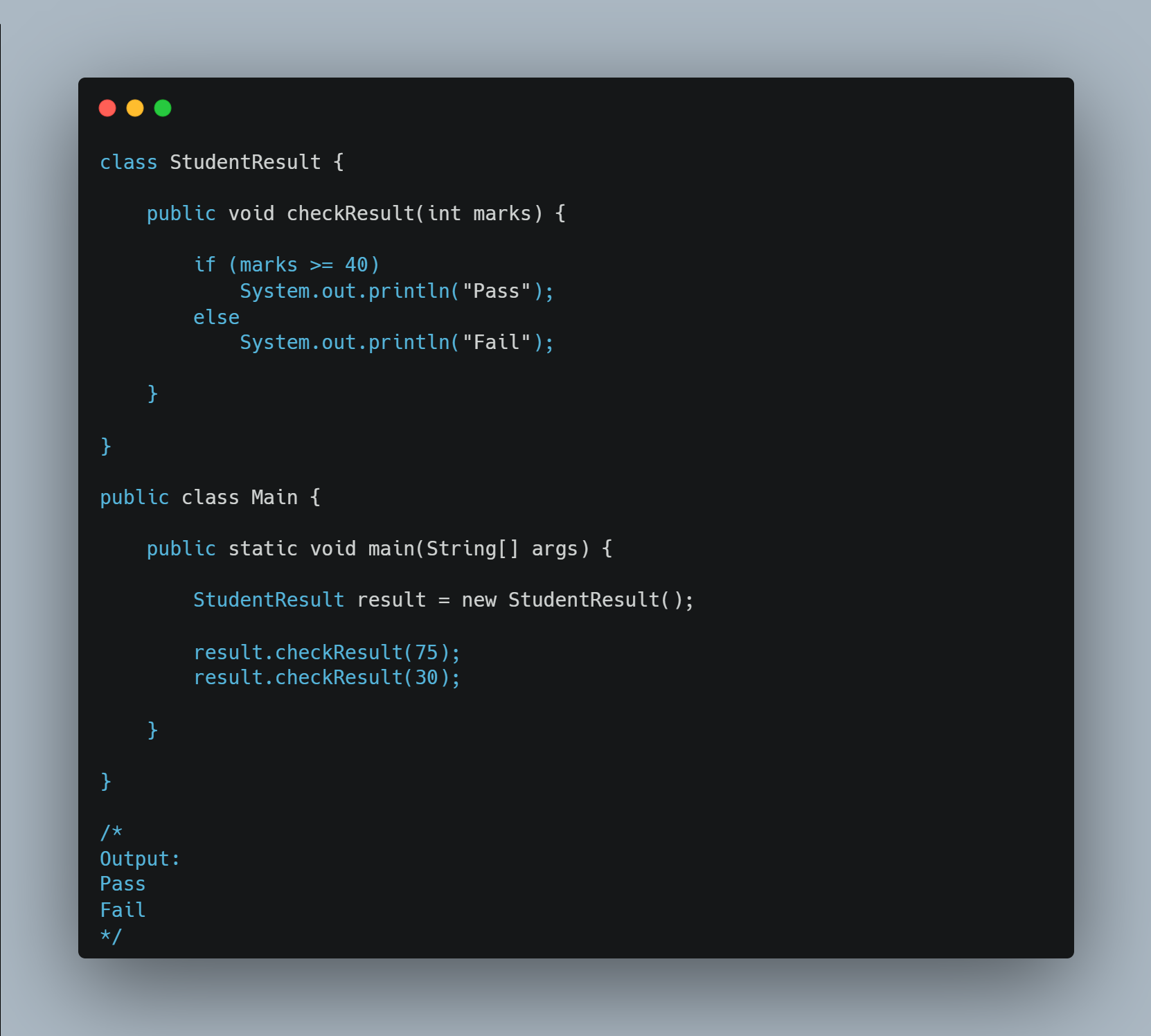
Imagine you're developing a Student Result Management System. The application calculates whether a student has passed or failed based on the marks obtained. The business rule is simple: if the marks are 40 or above, the student passes; otherwise, the student fails.
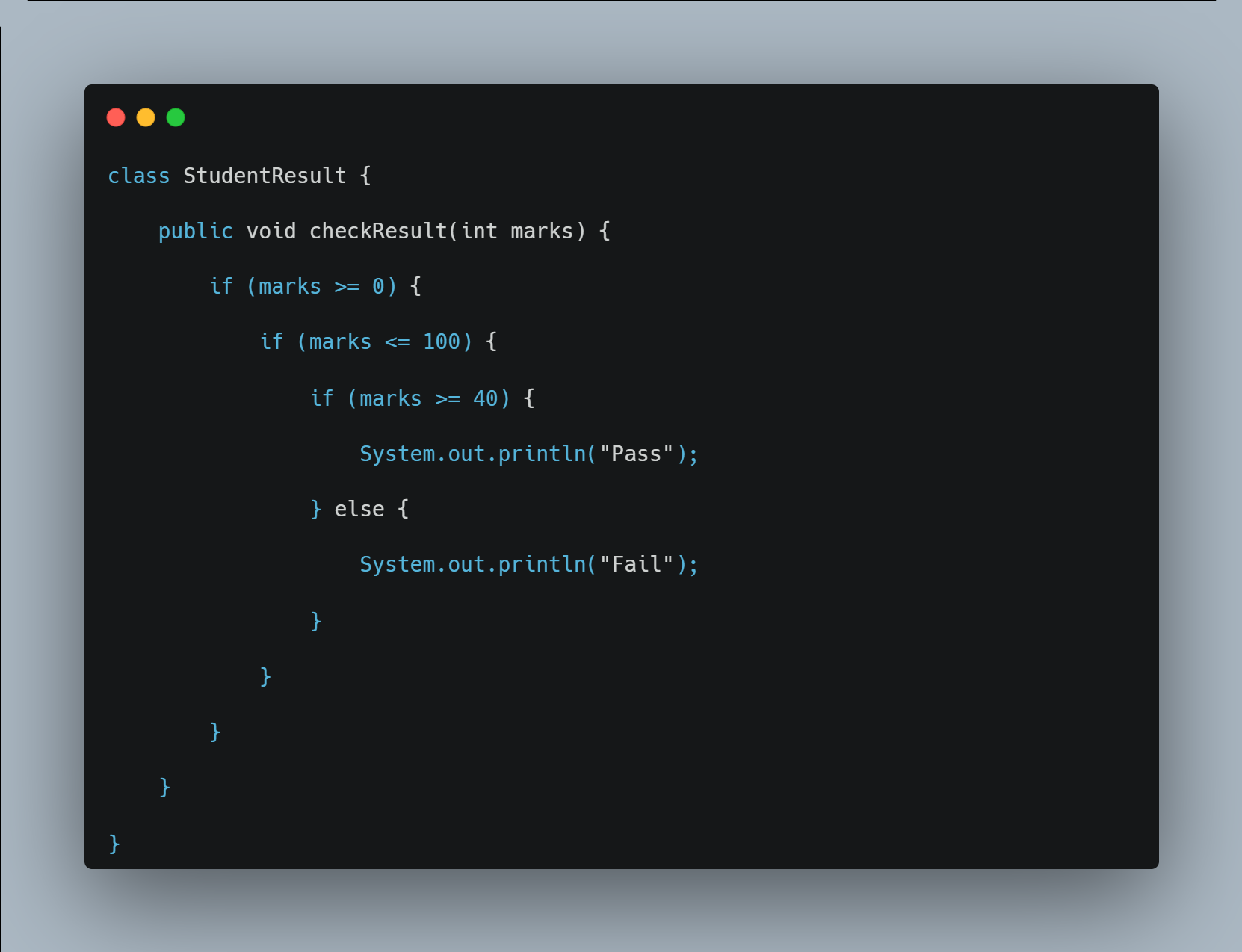
A developer decides to implement this simple requirement using multiple nested if-else statements and unnecessary conditions. Although the program works correctly, the logic becomes difficult to read and maintain. New developers spend more time understanding the code than solving the actual problem.
As the application grows, similar unnecessarily complex implementations appear throughout the project, making the overall system harder to maintain.
Problem Developers often believe that writing complex code makes software more powerful. In reality, unnecessarily complicated code is harder to understand, debug, test, and maintain. Even simple business requirements become difficult to modify because the logic is buried under multiple conditions and unnecessary statements.
Pain Points The code contains unnecessary nested conditions that make a simple task appear complicated. Reading and debugging the program takes more time because developers must trace multiple levels of conditions. As similar code spreads throughout the application, maintenance becomes increasingly difficult.
Solution
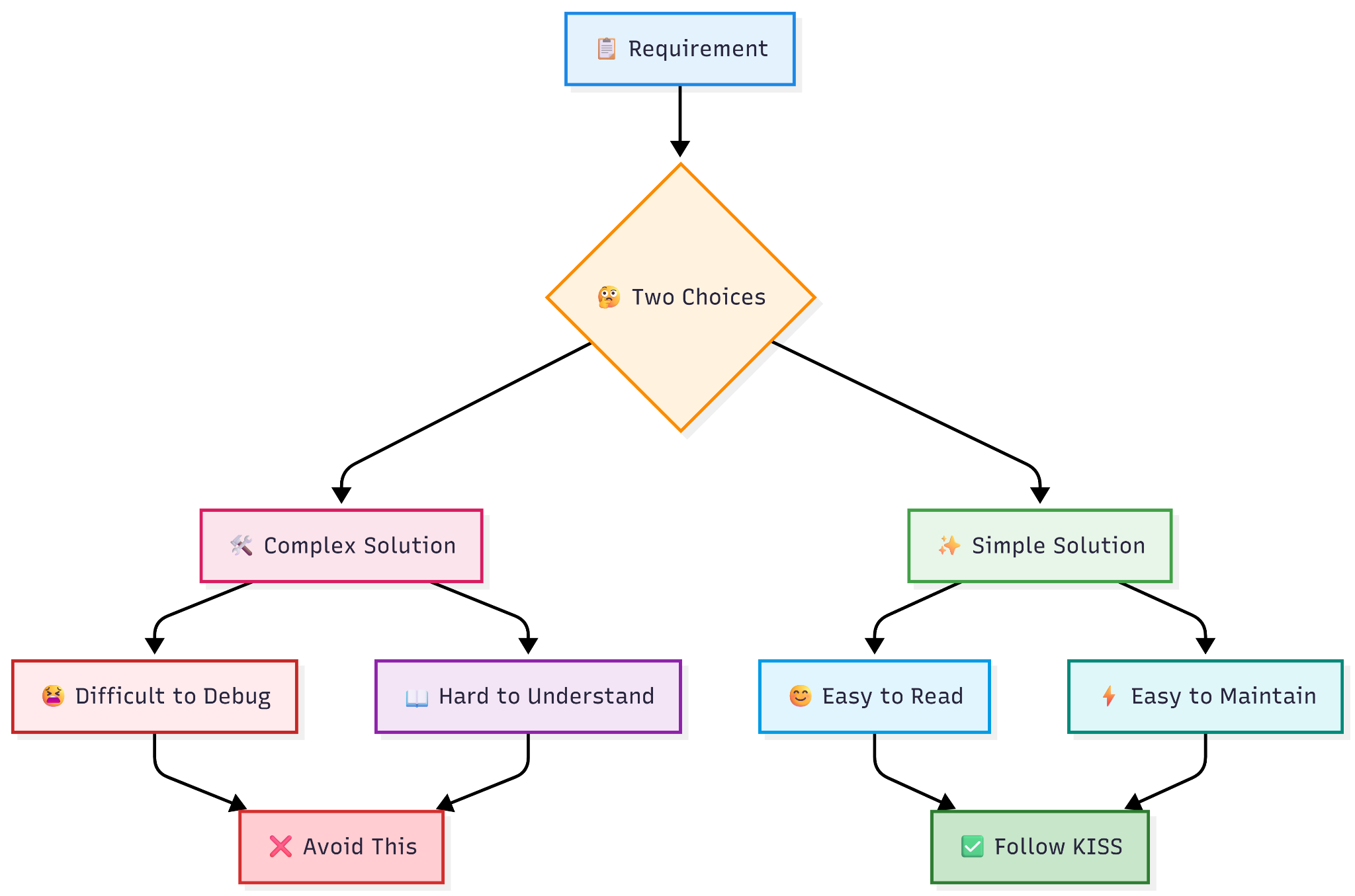
The KISS (Keep It Simple, Stupid) principle states that software should be designed as simply as possible while still meeting the requirements.
Instead of creating unnecessary conditions or complex logic, developers should choose the simplest solution that correctly solves the problem. Simple code is easier to understand, easier to test, and easier to maintain
Java Program 1 – KISS Violation
Java Program 2 – KISS Applied
Choose the straightforward solution over a clever one.
public class NumberUtil {
    // BAD: bitwise trickery that's hard to read
    // boolean isEven(int n) { return (n & 1) == 0; }

    // GOOD: obvious and correct
    public static boolean isEven(int n) {
        return n % 2 == 0;
    }

    public static void main(String[] args) {
        System.out.println(isEven(4)); // true
    }
}