OOP · Design Principles
YAGNI (You Aren't Gonna Need It)
Improves code readability.
Benefits
- Improves code readability.
- Makes debugging easier.
- Simplifies testing.
- Reduces maintenance effort.
- Makes applications easier for new developers to understand.
- Produces clean and efficient software.
Best Practices
- Choose the simplest solution that satisfies the requirement.
- Avoid unnecessary nested conditions.
- Break complex logic into smaller methods.
- Write meaningful and readable code.
- Refactor overly complex implementations.
Common Mistakes
- Adding unnecessary logic to simple problems.
- Using deeply nested if-else statements.
- Writing overly clever code that is difficult to understand.
- Confusing complexity with quality.
- Ignoring code readability.
Real-World Problem
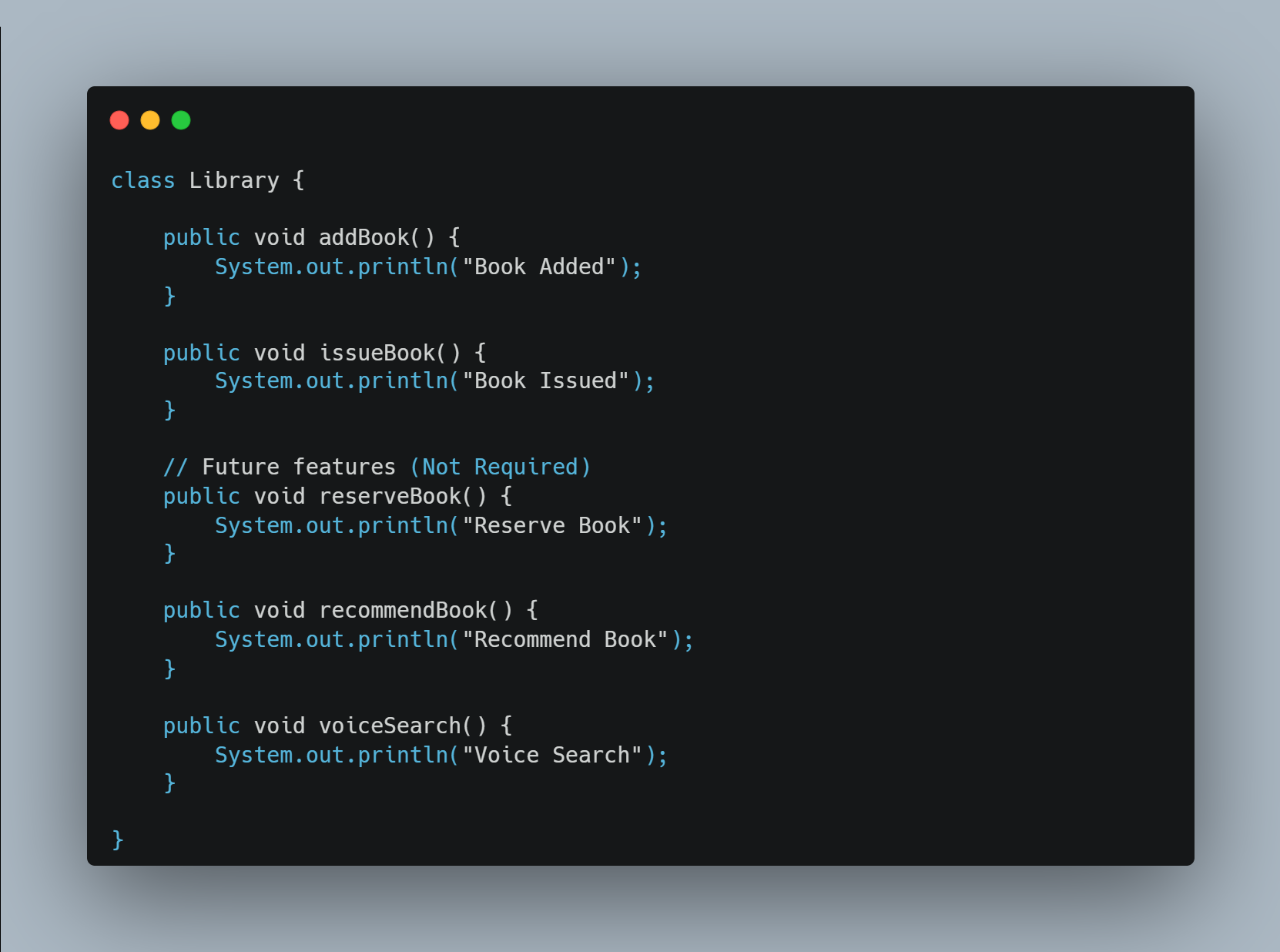
Imagine you're developing a Library Management System. The client initially requests only two features: Add Book and Issue Book. Instead of implementing just these requirements, a developer decides to prepare for the future by adding modules for e-books, online reservations, AI-based recommendations, voice search, membership rewards, and digital payments—even though the client never requested them.
Weeks are spent developing features that no one uses. Meanwhile, the actual required features are delayed. Later, the client changes the project requirements, and many of the extra modules become completely unnecessary.
Problem Developers often try to predict future requirements and build features before they are actually needed. This increases development time, makes the codebase more complex, and introduces unnecessary maintenance work. Many of these "future" features are never used or are later redesigned because the business requirements change.
Pain Points Adding unnecessary features increases development time and project cost. The code becomes larger and more difficult to understand, even though many of the added features are never used. Developers spend time maintaining code that provides no business value, and future requirement changes may make these extra features obsolete.
Solution
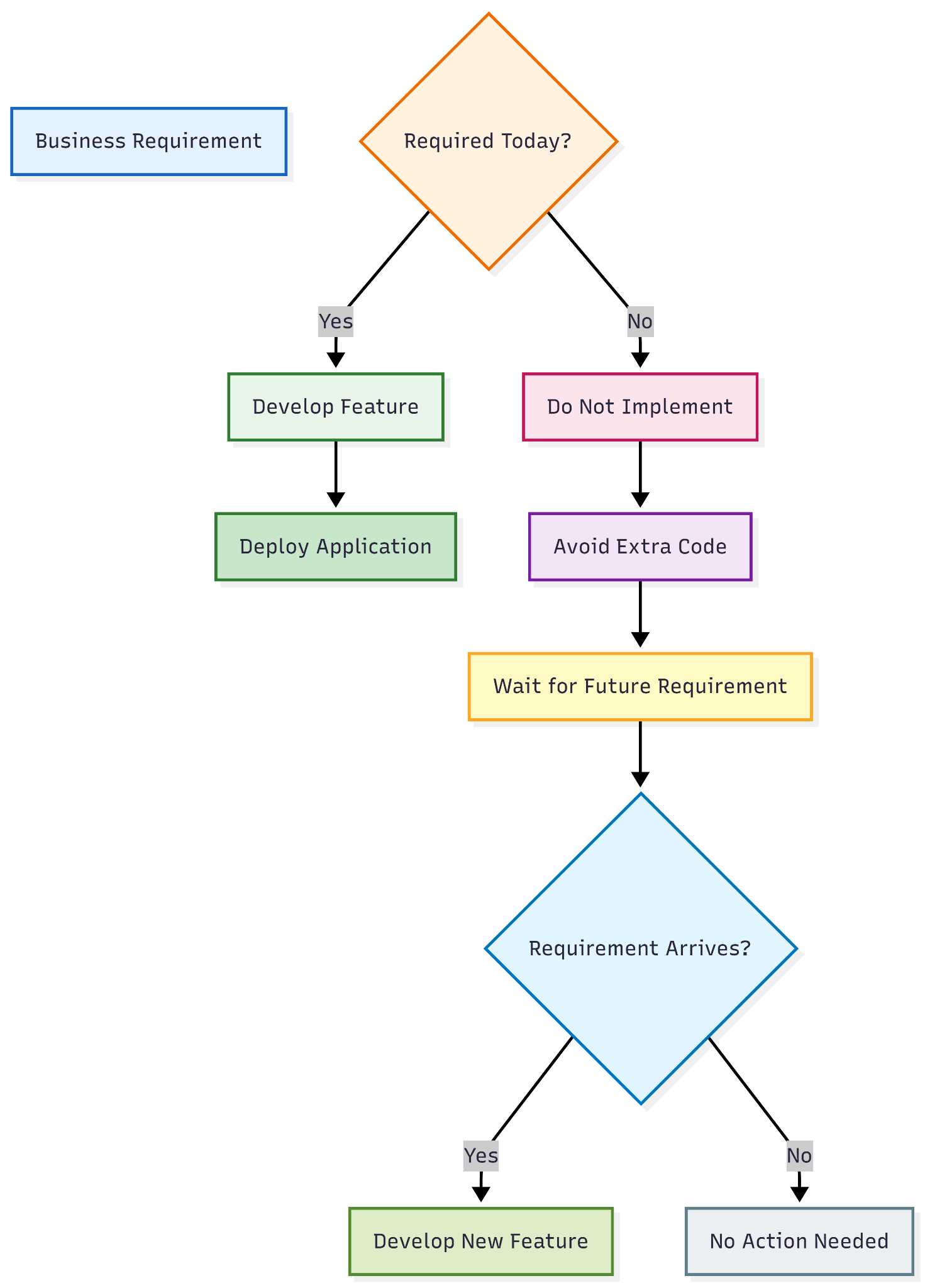
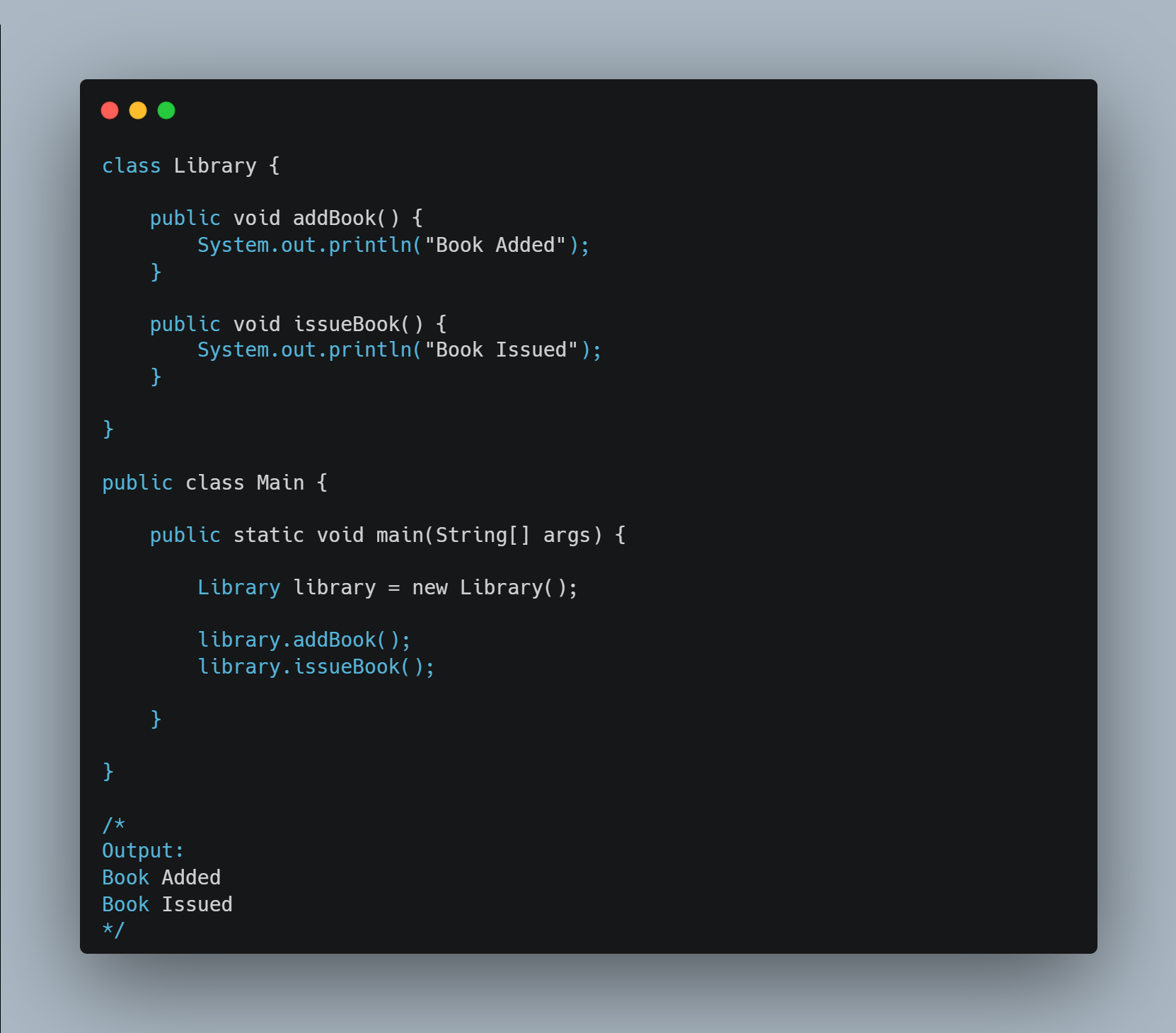
The YAGNI (You Aren't Gonna Need It) principle states that developers should implement only the functionality that is currently required.
Instead of predicting future needs, focus on delivering today's requirements. When new requirements actually arise, add the necessary functionality at that time. This keeps the application simple, reduces maintenance effort, and avoids wasting development resources.
Java Program 1 – YAGNI Violation
Java Program 2 – YAGNI Applied
Benefits
- Reduces unnecessary development effort.
- Keeps the codebase simple and clean.
- Lowers maintenance costs.
- Speeds up software delivery.
- Focuses on actual business requirements.
- Reduces the risk of building unused features.
Best Practices
- Build only what the customer currently needs.
- Avoid guessing future requirements.
- Add new features only when requested.
Don't build for imagined future needs — implement only what's required now.
// BAD: speculative flexibility nobody asked for
// class User { String name; String phone; String fax;
//              String secondaryFax; Map<String,Object> customFields; }

// GOOD: exactly what today's feature needs
public class User {
    private final String name;
    private final String email;

    public User(String name, String email) {
        this.name = name;
        this.email = email;
    }
    // Add fields when a real requirement appears — not before.
}