OOP · Design Principles
Low Coupling
Improves code readability.
Benefits
Easier to understand. Simplifies maintenance. Improves code readability. Easier unit testing. Encourages code reuse. Supports the Single Responsibility Principle. Reduces bugs during modifications.
Best Practices Give every class one primary responsibility. Keep methods closely related. Split large classes into smaller components. Avoid mixing unrelated business logic. Review classes regularly as requirements evolve.
Common Mistakes Creating "God Classes" with too many responsibilities. Mixing business logic with utility functions. Adding unrelated methods to existing classes. Ignoring class size and complexity. Violating the Single Responsibility Principle.
Real-World Problem
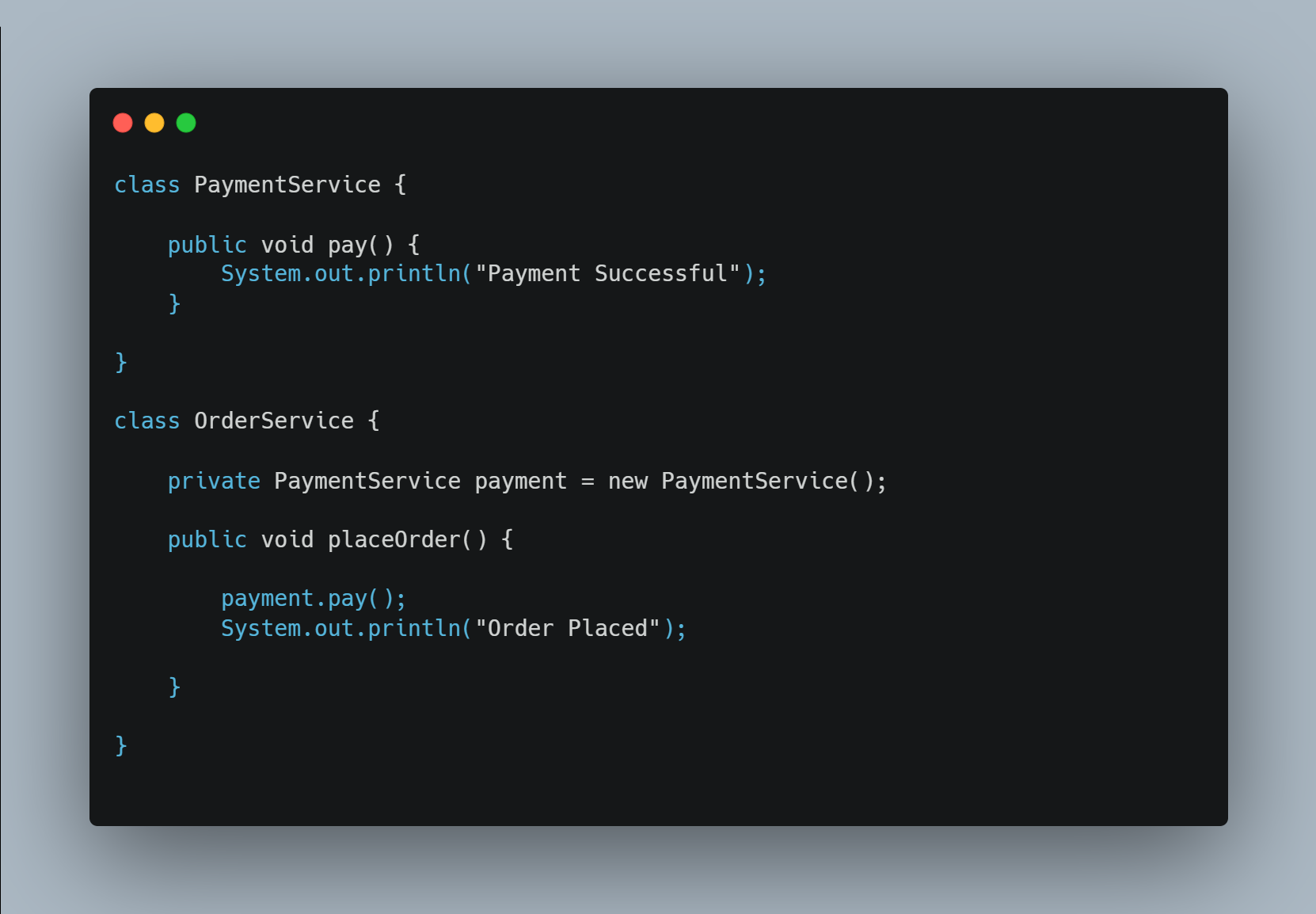
Imagine you're developing an E-Commerce Order Processing System. Initially, the OrderService class directly creates objects for payment processing, inventory management, invoice generation, and email notifications.
Whenever a new payment gateway or notification service is introduced, developers modify the OrderService class. As more integrations are added, the class becomes highly dependent on many concrete implementations.
Eventually, even small changes require modifications across multiple classes, making the system difficult to maintain and extend.
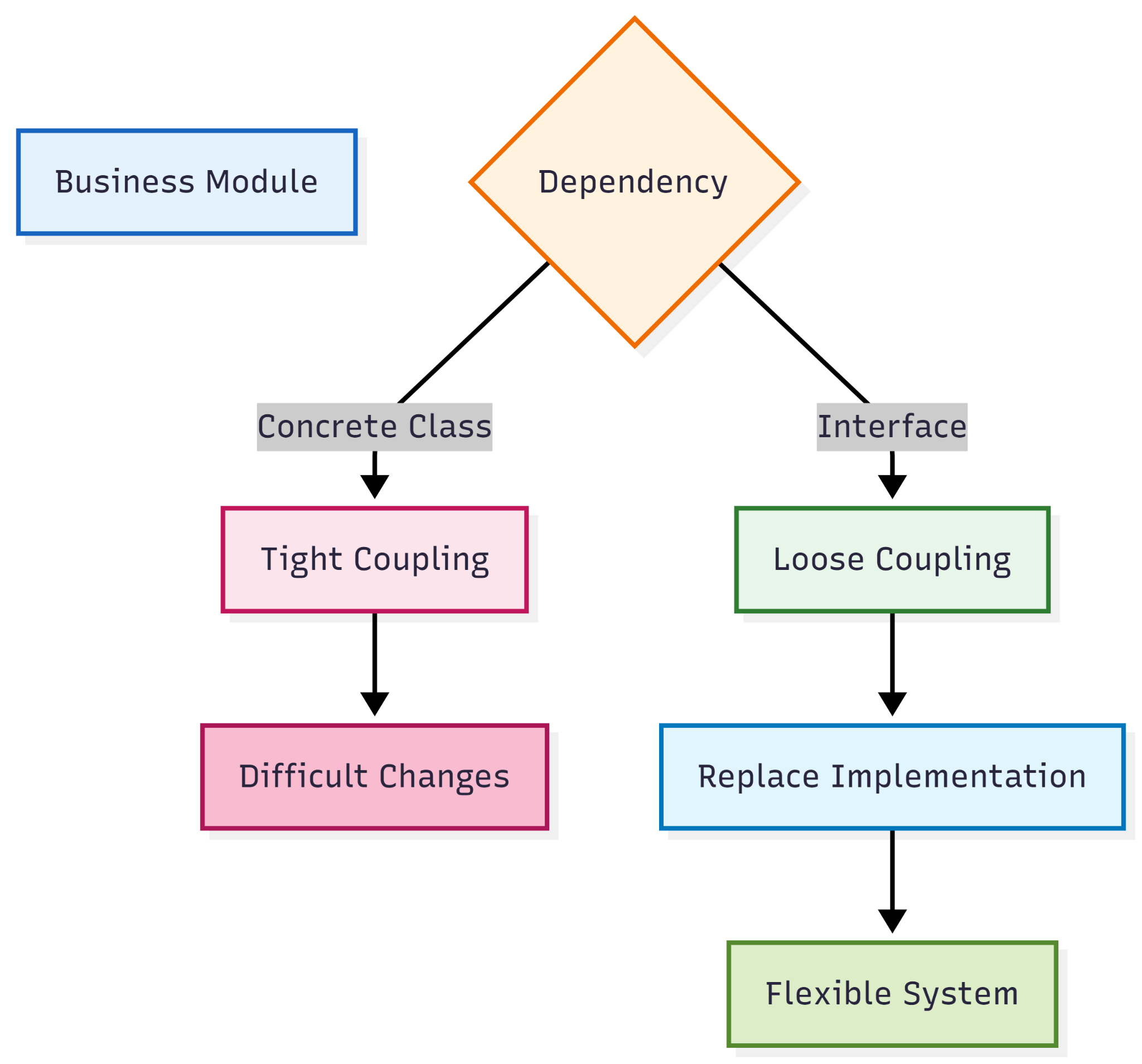
Problem When classes depend heavily on one another, they become tightly coupled. A change in one class often forces changes in other classes, reducing flexibility and increasing maintenance effort.
Pain Points Tight dependency between classes. Difficult to replace implementations. Poor testability. Reduced flexibility. High maintenance cost. Increased risk of bugs.
Solution
The Low Coupling principle states that classes should have minimal knowledge of and dependency on other classes.
Instead of depending directly on concrete implementations, classes should interact through abstractions such as interfaces. This allows implementations to change without affecting business logic, making the application more flexible and maintainable.
Java Program 1 – Tight Coupling (Bad Design)
Java Program 2 – Low Coupling (Good Design)
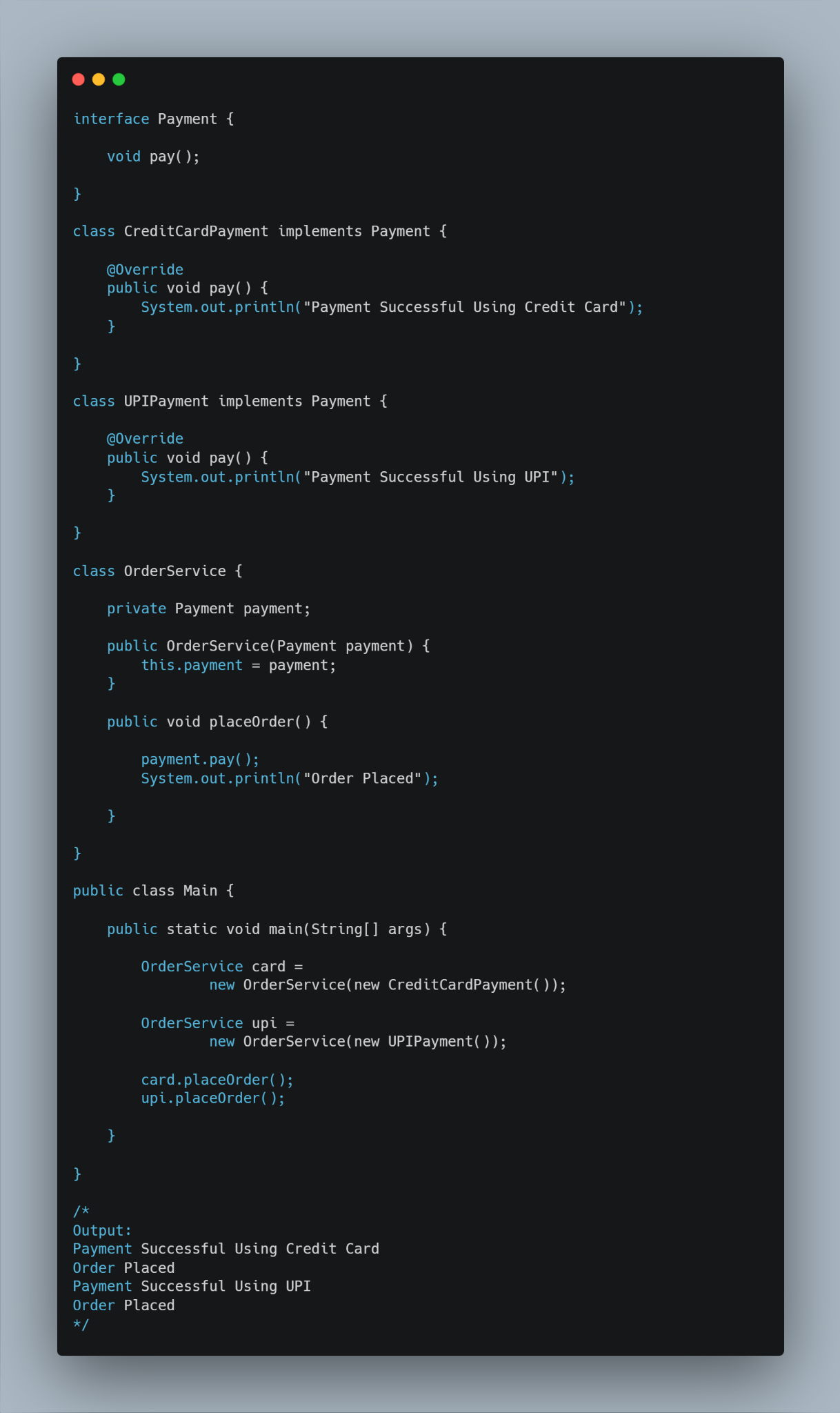
Minimize how much classes know about each other by talking through interfaces.
interface Database {              // the seam that decouples them
    void save(String data);
}

class MySqlDatabase implements Database {
    public void save(String data) { System.out.println("Saved to MySQL"); }
}

class UserService {
    private final Database db;     // knows only the interface

    UserService(Database db) { this.db = db; } // swap DBs without touching this class
    void register(String user) { db.save(user); }
}